
Update On My Mission Impossible: The HRV Experiment
Yearly Reflections of My North Star: Strategies that Heal the Nervous System

On the 1st of August 2025, I set an incredibly ambitious North Star: I was to explore every way possible to quadruple my HRV. No timeframe was set. This was a lifetime journey.
What makes this North Star incredibly ambitious is my background in C-PTSD. Most research on improving HRV has been done on individuals with healthy upbringings and mild daily stresses. A few of these people have shared their stories online as “I doubled by HRV in only 6 months! From 60 to 120. You can do it too!” That is very impressive, but not so helpful for someone who didn’t have a healthy upbringing.
Having >50 HRV is not a low starting point. It shows enough resilience of the nervous system to safely try common practices like box breathing and ice baths. It also generally points to a ‘clear miss’ in a person’s daily routine — having an unhealthy habit. I’ve read articles and watched YouTube videos on terribly unfit young people who pick up the habit of running and dramatically improve their HRV within months. Or people who scroll all night on social media, surviving with 4 hours of sleep per night, finally allowing themselves to properly rest and improve their HRV. For some people, it’s about avoiding heavy exercise 2 hours before bedtime and eating KFC an hour before sleep. The fix is not easy, as changing lifestyles and habits are challenging, but it’s much more straightforward. At least, the risks and ambiguity are very low.
My challenge was never about alcohol, smoking, or letting go of the late-night party culture. It was the ambiguity of healing an injury one can’t even touch or see — a complex injury that our scientific knowledge struggles to unpack — a system that’s deeply integrated in the brain stem and amygdala, which has been pushed to the edge and is malfunctioning.
That requires reinventing the wheel.
Online forums about HRV written by people with C-PTSD are quite depressing. Anecdotal experiences reveal that this is almost an impossible mission. Most successful people start somewhere between 10-30 HRV and tend to only uplift their scores by 10-15 points from a decade of trying.
By running these experiments and playing scientist, I hope to help others on similar journeys. Maybe it’s naive, but if I can do it (someone with a suicidal background), others can do it too. We just need to figure out the right protocol for healing.
In this article, you will find…
Why having a high HRV is important (and why this is a controversial topic)
Experiments I ran & results
Impacts of improving HRV on my life
Future experiments
If you know someone who has gone through a similar journey or has expertise in improving HRV with a trauma background, I’d love to connect with them. Please reach out!
Note: as my articles are already really long, I will separate the “how to build your own protocol for improving autonomic nervous system health” to another day.
Why Having a High HRV is Important?
After diving into a rabbit hole of opinion articles about HRV and Reddit threads, I noticed a few things.
Improving HRV is quite a challenging and long-term process, even for people without mental health illnesses or trauma. It requires significant changes to one’s life routine, a lot of discipline and patience. The nervous system behaves in ways it’s been trained to do so, and rewiring is not easy.
Half of the internet voices full-heartedly believe that having a high HRV really matters for optimal health (including longevity experts), while the other half are sure that this is an irrelevant data point and completely related to your genetics. The classic, “I don’t know much about epigenetics, I’m not responsible for my health, because there is nothing I can do to improve my health, because I’m doomed by my parents.”
Note that I don’t fully disagree with the role our genes play in how high our HRV can go, but… I mostly disagree (thoughts elaborated later in this article). In short, HRV is somewhat similar to VO2Max. To be in the top 1%, you need exceptional fitness, health and genetics. But to have a ‘very good’ VO2Max, you just need to be fit (and not smoke).
I haven’t come across a single person who claimed the irrelevance of HRV via scientific research. This group either has a low HRV themselves or their child/partner has a low HRV. A little defensive from an offended crowd. At least most of the time, they admit (then dismiss) a very unhealthy habit that they have — something along the lines of, “yes, I don’t have the best sleep, like it’s very inconsistent and about 5 hours per night, but it’s not like that makes much of a difference anyway.” Despite that, this group also believes that they are “very healthy,” sometimes based on blood tests (that compare them to the wider population, including those with chronic diseases), and sometimes based on their feelings. Sounds familiar to the TruDiagnostic critics. It’s the “I feel healthy, therefore I am(!!!)” statement. Oh, I wish things were that simple; I would just feel my way through life. 🧘♀️
Let me explain what HRV is, and I’ll let you be the judge.
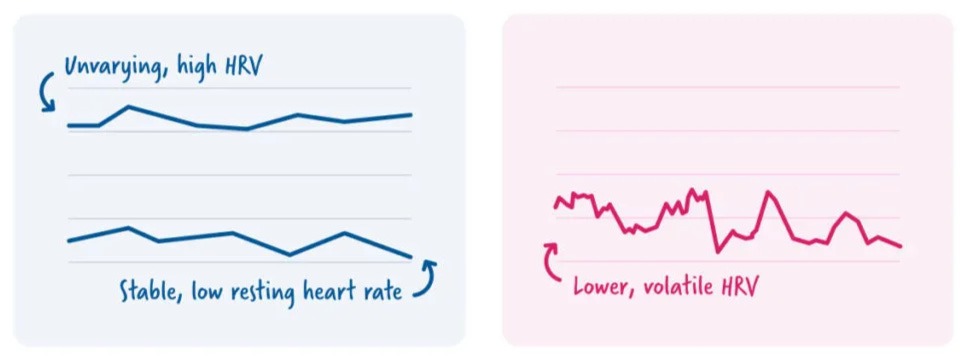
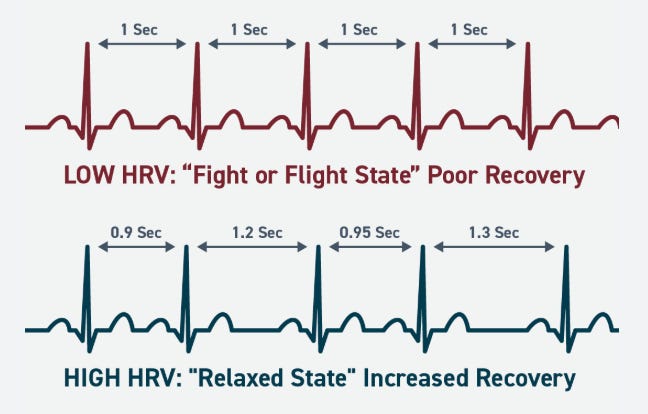
Heart Rate Variability (HRV) is the measure of the variation in time between each heartbeat. Resting Heart Rate (RHR) is the average beats per minute.
If you are wondering, hold on a sec, what do you mean by the variation and the average of my heart beats… your heart does not beat regularly, like… “bum - bum - bum - bum.” That only happens in movies. In real life, your heart beats more like… “da - bum —— da - bum —— da - bum —— da - bum.”
The exact changes in time between successive beats show the balance between your sympathetic (fight-flight) and parasympathetic (calm-rest-digest) systems. A healthy autonomic nervous system (ANS) will have a healthy balance/regulation between these two systems.
Depending on your condition, doctors can use HRV, MRI, Tilt Table Test, breathing tests and sweat tests to measure the health of your ANS.
First image shows trends over time (i.e. week), second image shows trends within a day.
✅ We have established that HRV is an indicator of the health of your autonomic nervous system.
A healthy nervous system is associated with…
Better sleep quality:
You can find countless research papers and clinical trials on NIH, ScienceDirect and Frontiers to show the link between a healthy nervous system (high HRV) and high sleep quality (self-reported and tracked by wearables).
Better sleep quality will help reduce and avoid psychological stress and cognitive decline (memory, focus, response time, etc).
Higher resilience to psychological challenges:
Having lower resilience and HRV is a significant risk factor for developing PTSD, even from generic adulting challenges.
People with lower resilience to psychological challenges are more reactive throughout the day, which makes maintaining healthy relationships challenging.
Higher resilience to physical strain:
Athletes generally track their HRV to ensure they are not overtraining. Consistently running a very low HRV also increases the risk of injuries and overtraining, as the body finds it challenging to recover.
Higher resilience of the immune system:
The risk of any immune disease is 58% higher for those with trauma and dysregulated nervous systems.
Chronic stress releases histamine, raises inflammation levels and suppressor T cell levels.
Regulation of hormonal health:
Recent studies are revealing that both trauma and a dysregulated nervous system lower testosterone levels in men.
Consistent activation of the sympathetic and dorsal vagal systems can lead to loss of periods for women. This makes sense from an evolutionary standpoint. When the body is trying hard to survive, why should it give birth to a baby?
Trauma patients have 37% higher chance of experiencing pregnancy complications — 41% higher chance of premature birth, and 27% higher chance of giving birth to a baby with low body weight.
Healthy metabolism:
A dysregulated nervous system can cause insulin resistance, high blood sugar and high blood pressure.
A dysregulated nervous system promotes fat storage (especially visceral fat). Our nervous systems function in a very similar way to how our great-grandparents’ nervous systems functioned in the Bronze Age. Yes, we haven’t changed much at all! So, it can’t tell the difference between the danger of starvation and divorce. Both are stressors, and both can lead to your body trying to brace itself for a harsh, hungry winter (by storing excess fat).
30-40% of people with metabolic syndrome have dysregulated nervous systems.
Healthy gut & digestion:
A dysregulated nervous system due to chronic stress changes the acid concentration in the stomach and the microbiome in the gut.
These changes in the gut microbiome often lead to IBS, leaky gut syndrome and other digestive problems.
Healthy heart:
People with a dysregulated nervous system often show elevated cholesterol, C-reactive protein and RHR.
Phobic anxiety increases the risk of coronary heart disease by 70%. Panic disorder increases this risk by 50% and PTSD by 61%.
Good cognitive health:
Trauma influences microglia, the brain’s immune system. When facing high trauma, the microglia eat the nerve endings instead of enhancing growth.
A dysregulated nervous system can result in poor memory, poor concentration, poor problem-solving skills, poor decision-making and poor emotional regulation.
Note: people with chronic health diseases (especially cardiovascular health), mental health illnesses, persistent immunity issues and trauma will have a lower HRV.
If you ask me, that’s pretty important stuff! While you don’t need to race with athletic young men and score over 200 HRV, maintaining a high HRV will benefit you a lot.
Here are two graphs showing what a healthy HRV chart looks like by age. To set the right expectations, a fit person’s HRV should be above the average on this chart.
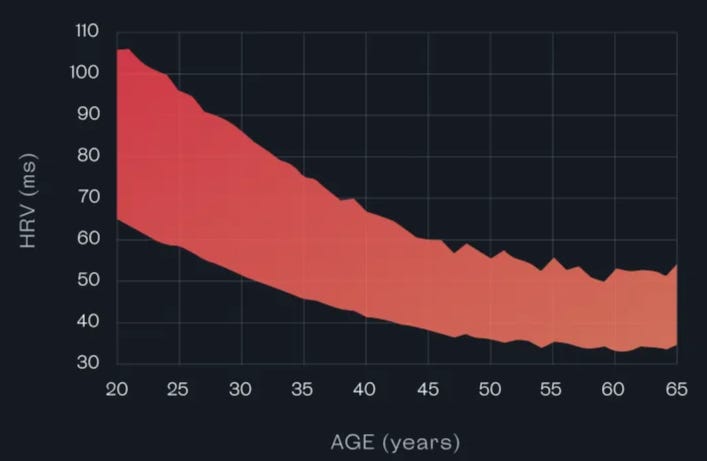
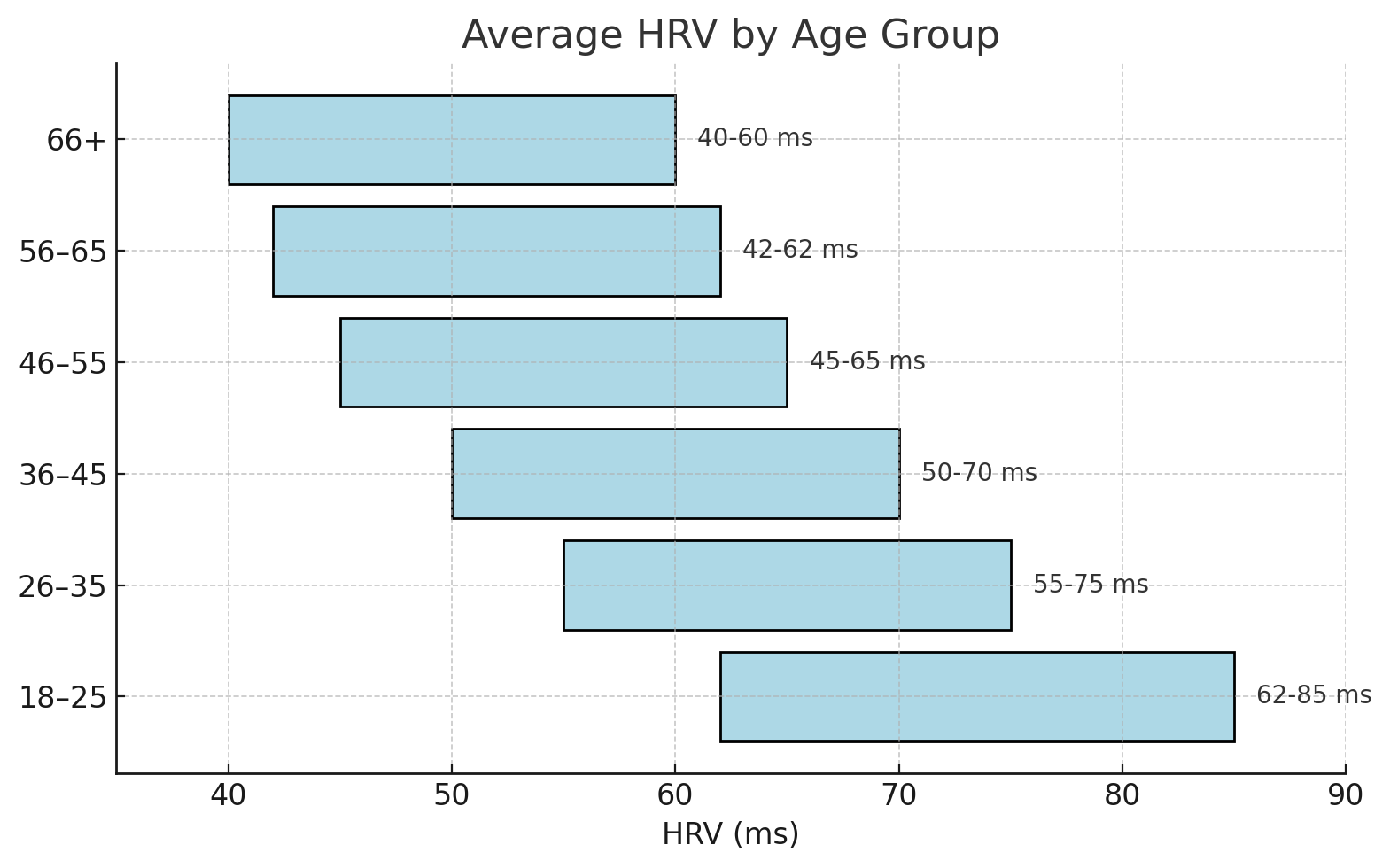
The variance in HRV is not only caused by levels of fitness, stress, sleep quality and overall health. Genetics play some role in this as well. Some people will have a shockingly high HRV. It’s not uncommon on Whoop to see fit young men (generally team sport players or runners) with +200 HRV. However, if your HRV is well below the healthy range, I refuse to hide behind the “not my fault or responsibility, it’s my genes” line of defence.
Hope I cleared up why I am obsessed with tracking HRV, along with RHR. For me, it’s a key step in healing C-PTSD and improving my overall health and resilience.
To clarify (because someone asked me this at a longevity event), having traumatic experiences doesn’t always lead to a low HRV. As mentioned in a prior post, my partner also experienced some traumatic events as a child. He showed symptoms of trauma, worked on growing and becoming more resilient in his 20s. He has a very good RHR and HRV for his age.
In a prior article reviewing Pulsetto, I mentioned the difference between parasympathetic, sympathetic and dorsal vagal systems. The nervous system receives the most damage when it is consistently put through the dorsal vagal system and believes that it is stuck in danger (there is no escape, no hope). Not all traumatic experiences actively trigger that state. There is also emerging research illustrating the difference between how male and female bodies/biology handle stress.*
The threshold for ‘damaging stress’ is higher for men than women (on average), meaning men tend to handle higher stress levels better.
Damage to the male nervous system doesn’t cause as much damage to the other organ systems as it does to females. There is clear evidence showing links between trauma and poor gut health, cardiovascular diseases, elevated liver values, chronic pain, autoimmune diseases and cognitive decline for women. The results are less severe for men (except for cognitive health). I also acknowledge that comparing trauma is complex and challenging, so more research is needed for this topic.
Women generally show a larger cortisol response to stress and lower pro-inflammatory cytokines in comparison to men. Women also have a lower baseline of cortisol concentration.
Adding on, our bodies are better at handling ‘one-time’ stressors, like running away from a bear in caveman times, instead of chronic, dragging stress (i.e. toxic career environments, constant poverty, taxes). Some also argue that the female mind and body are under constant stress without a break. Fair argument!
Examples; pregnancy and taking care of babies (the crying, poor sleep, physical labour etc), hormonal shifts (increase of stressors leading up to monthly periods and menopause), and taking up too much responsibility (children, domestic duties, career duties, etc).
Therefore, research suggests that women are 2x more likely to develop PTSD than men. Noting that an absence of a PTSD diagnosis doesn’t mean the individual was not negatively impacted by the traumatic event.
*Please don’t read the above as “women are weak or incapable.” The science shows a different stress response between the genders. Let’s not interpret “different” in a negative light.
Before I move on to the next section of this article, here are two useful videos from the Huberman Lab Podcast.
Experiments I Ran & Results
On my mission to quadruple my HRV, I documented all the things I tried this year.
Noting a few key events that happened prior to this year’s experiment, which have also positively influenced my HRV and sped up my recovery process.
I had EMDR therapy for 3 months.
Anecdotal evidence from trauma patients suggests that EMDR can improve HRV by 10 points within 3 months.
In a randomised trial, EMDR significantly increased high‑frequency HRV (p = .003) and reduced low‑frequency HRV (p ≤ .001) immediately after treatment. The effects were maintained at 1 month and 3 month follow‑up sessions, indicating stronger parasympathetic tone and better autonomic balance. The positive results are consistent in other trials too.
If you are located in Sydney and looking for a clinical psychologist specialised in EMDR and C-PTSD, I highly recommend the Centered Life Psychology Clinic in Kogarah. The small clinic is run by Tala Mansour, who has done magic for me. It’s quite challenging to find a psychologist with C-PTSD and EMDR expertise, but once you find a match, the process really uplifts your life quality in many ways.
I went no contact with my parents and low contact with some family members.
Anecdotal evidence by C-PTSD survivors and observant psychologists suggests that removal of nervous system triggers (i.e. toxic/dangerous environments, situations and people) significantly improves the autonomic balance and health of patients.
In October, I organised my workout schedule for the week to have 2 back-to-back rest days. This has helped me boost my HRV and recovery fully from the physical strain. My prior routine was 2 workouts, 1 rest, 3 workouts, 1 rest.
On the 1st of August 2025, my average HRV was about 24, as it bounced between 19 to 29. This average was calculated during a period when I was taking a break from regular exercise. I cannot imagine what my HRV would have been like before EMDR and going no contact. Based on my research, a relatively healthy and active woman in their early 20s with C-PTSD that hasn’t been treated by a professional can expect a HRV between 8-20. That’s very scary. I began this journey ranking among 75-85 years old women, despite my level of fitness and overall health.
Experiments
Tracking Method: Whoop (RHR, HRV, sleep stress, sleep quality, daily stress) and daily mood.
Other Indicators: frequency of nightmares, regularity of periods and reactivity to stressors.
Note: I have travelled a fair amount while running these experiments. Travelling brought some irregularity and inconsistency in my daily schedule, which isn’t the perfect base for HRV experimentation. The nervous system is most comfortable in safe and predictable environments. That being said, I tried my best to maintain the same schedule almost every day and avoided major stressors.
Disclaimer: what works for me may not work for you.
Repeating Daily Affirmations
Duration: 15 minutes every day for 2 weeks. Morning.
Impacts on HRV: No effect.
Other Impacts: Slight increase in optimism and confidence. While it makes you feel good in the moment, it does not decrease stress when triggered.
Conclusion: To set the right intentions for the day, it’s a good idea to do it in the morning, especially if morning prayers or gratitude aren’t already a part of the routine. Given my goal of building a protocol for improving HRV, this is no longer prioritised in my routine.
Guided Meditations
Duration: 15 minutes, 3x a week over 2 weeks. Midday.
Impacts on HRV: No effect.
Other Impacts: Difficulty completing the session due to rising heartbeat and stress response. Ended sessions about 5-7 minutes early with a heavy heart and throat ache, feeling of choking, and slight panic response. Whoop showed that I entered Zone 1. Nightmares.
Conclusion: Unsuccessful.
Some of my trauma memories link to nighttime events. So, my nervous system associated calm, quiet, still and dark (eyes closed) environments with an expectation of sudden danger. I suspect this triggers a stressful response during meditations.
Later research and discussions during the Wanderlust Longevity Event led me to realise that what triggered an intense response was my persistence in avoiding a cry (forcing emotions). I was also recommended to start with 5 minute meditations to get my nervous system familiar with the practice before increasing durations to 15 minutes.
I also concluded that this was an intermediate exercise, and I was a beginner with a very low HRV when I experimented with guided meditations.
Boxed Breathing
Duration: 5 minutes, 3x over 2 weeks. Night.
Impacts on HRV: Slight Dip (3-5 points).
Other Impacts: Difficulty completing the session due to rapidly rising heartbeats and sharp stress response. Could not breathe longer than 2 minutes each time. Difficulty breathing, feeling of choking, and a heavy heart and throat ache. Panic response and slight confusion. Nightmares. Some forgotten/buried memories rose to the surface of consciousness. They were unpleasant. It made sense why my brain wanted to forget about them in the first place.
Conclusion: Unsuccessful. Similar reasons as my response to ‘guided meditation’. I experimented with this too early; I would classify box breathing as an intermediate exercise.
Warm Bath
Duration: 20 minutes. Tested on different weeks for 3x in total. Night.
Impacts on HRV: Dip (5-7 points).
Other Impacts: Faint, confused, dizzy. Took me about 15 minutes of lying on the bed and cooling down to feel ok.
Conclusion: Unsuccessful. I was recommended to try sauna, but chose to start with a warm (not hot steaming) bath to test my response. I have low blood pressure, so that’s probably the cause of my response.
Restorative Yoga
Duration: 15 minutes 3x a week for 3 weeks. Night.
Impacts on HRV: No effect.
Other Impacts: Helps with flexibility and relaxing the muscles a bit.
Conclusion: Impacts are very small and not worth the time for me.
Yoga
Duration: 15 minutes 3x a week for 3 weeks. Morning.
Impacts on HRV: No effect.
Other Impacts: Helps with flexibility a bit.
Conclusion: Can complement a regular exercise routine. It’s good to get some movement in the body even on rest days, so I’m currently doing yoga once a week to aid recovery.
Float Therapy
Duration: 50 minutes, 1x week for 4 weeks. Afternoon.
Impacts on HRV: No effect.
Other Impacts: Deeply relaxing for the mind and body. My RHR did drop during the session, but not to outstanding levels. The float tank and sensory deprivation feel like disappearing into the space, which I find to be extremely peaceful. Others find this scary and claustrophobic. It’s a personal preference.
Incredible for my hair and skin health. This is why I love going to the beach for a quick dip (something I should do more of). Salt does wonders for naturally curling my hair, smoothening my skin, and taking the oil from my forehead.
Improving bodily awareness. As you float, it’s common to notice where the tension is in your body. Is there tightness in your neck? Do you have joint pain? Did your calves work out too much? The experience enhances the mind-body connection.
Conclusion: Admitting that I should have probably attended float therapy multiple times a week to test its impact. I attended float therapy on my rest day (no exercise) to see if it would boost the recovery.
The challenge with float therapy is the temperature for me. The temperature needs to be exact — not cold but not too warm, as I feel faint in warm baths — but most places have the temperature setting too warm for my comfort.
Given the time commitment, accessibility challenges and costs associated with this therapy, I find this to be an expensive hair and skin care. However, it is a calming self-care activity, so I am more inclined to treat this like a massage session — once every 6 weeks, as a ‘treat yourself’ time.
Sound Healing
Duration: 30 minutes, every 2nd day for 2 weeks. Midday.
Impacts on HRV: No effect on its own. When coupled with NSDR, it enhanced the effectiveness of the practice by about 3 points.
Other Impacts: Relaxing for the mind, builds my inner optimism, stabilises the mood within the first 30 minutes. Beyond 45 minutes, feeling slightly uncomfortable, fidgety and overstimulated.
Conclusion: Incorporated this in my nightly NSDR routine for 15 minutes. On some days, I prefer to listen to sound healing tunes while working for 30 minutes.
I need to make an effort to lie still for 10 minutes midday with sound healing to reset the mind. I also need to make a greater effort to strengthen my nighttime wind-down routine, as I would like to introduce sound healing while reading a book in bed for 20 minutes.
In retrospect, the best practice for sound healing is not to move your body, but during my experiment, I continued to work on my blog. So, this probably was not a well-conducted experiment, even though the impacts are showing positive.
NSDR (Non Sleep Deep Rest) or Yoga Nidra
Duration: 15 minutes, every night for 4 weeks. Night.
Impacts on HRV: Built my average HRV by 10 points to 34. Over 4 weeks, I was able to hit my first all-time high HRV for 1 night at 53. I also hit 44 and 41 once.
Instantly felt the difference after the first practice, and it blew my mind. My HRV improved over the first 3 weeks of the practice, then held steady. NSDR shields my nervous system from heavy strain, as my HRV does not dip dramatically after a heavy gym or running day — holds relatively stable throughout the week. When NSDR is not performed, a sharp dip in HRV is seen.
Other Impacts: Reduces RHR by 5 points. Reduces nightly stress levels from medium-high to a steady low. When I began my journey of experimentation, my nightly stress levels were consistently high throughout the night, as if I were exercising all night. Since NSDR, my sleep stress rarely reaches to medium levels.
Interesting note: during the first week of NSDR practise, I saw dreams with “nightmare” content, without feeling scared. Really graphic and scary content did not affect me because in those dreams, I felt detached from my body — i.e. people stabbing me, but it did not hurt. So, I strongly believe that NSDR helped me to process some trauma as well.
Deeply relaxes the mind, and a sense of safety flows through the body. Helps falling asleep instantly — I may hold a record for sleep latency and sleep efficiency on some nights. Cools the body temperature.
Over the last 2 months, regular practise of NSDR has improved my breathing — lung capacity and capability of performing breathing exercises for ‘relaxation’.
Improved my bodily awareness, mind-muscle connection, daily mindfulness, and reduced chances of overtraining/injuries. Improved my emotional awareness — I can differentiate whether my muscles or my nervous system is tired.
Conclusion: This is a must-have of my nightly routine, almost a non-negotiable.
Best performed when lying on the ground (instead of a bed) in a dark and quiet room.
I suspect this practice works for me due to the routine element of it. A body scan during NSDR is like a checklist — predictable, from head to toe. For this reason, unfortunately, the positive impacts of this practice are only seen after 1 specific yoga nidra recording. I have memorised the recording fully because if I try a new recording, then I don’t see the positive impacts (as it becomes unpredictable).
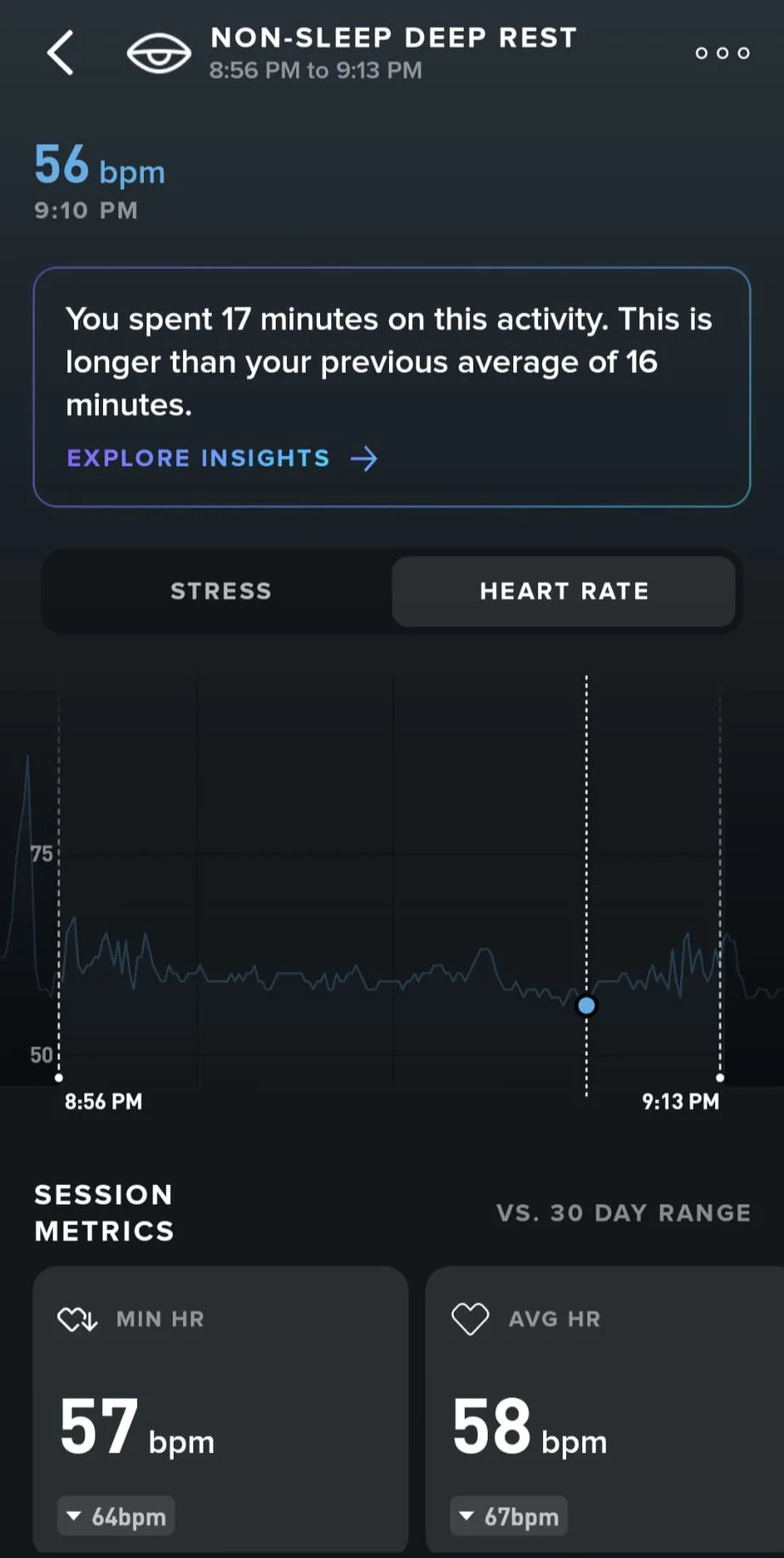
This is an average NSDR session. Sometimes my min HR is 60, sometimes 56.
Here is an example NSDR practise you can try at home.
I found out about this on a Huberman Podcast (listen to “30 Minutes of This Feels Like 8 Hours of Sleep” for more info). Ever since, I’ve been wanting to reach out to express my gratitude. Need to do that.
Pulsetto Vagus Nerve Stimulation
Duration: 2x a day, 5-10 minutes each session for 6 weeks. Morning and night.
Modules: Sleep, stress and burnout.
Impacts on HRV: Drop by 10 points. Negative impacts lasted for 6 weeks.
Other Impacts: See my full review on Pulsetto. It’s been a disastrous experiment with lasting effects on my RHR, sleep quality and daily stress, which in retrospect I should have stopped much sooner.
Conclusion: Caused injury to my nervous system. This is an advanced product for individuals with healthy backgrounds. Not willing to try this product again until my HRV triples from where I started.
Hyperbaric Oxygen Therapy (HBOT)
Duration: 1 month, 3x a week for 50 mins, low pressure. 1 month, 3x a week for 90 mins, high pressure. Midday.
Impacts on HRV: No effect. However, during sessions with high pressure, my RHR dropped to all-time-lows; I was able to activate my parasympathetic tone.
Other Impacts: This is a very refreshing and calming experience.
VO2Max improved from 49 to 51. I genuinely felt my breath capacity improve. After months of trying to run faster with very minimal improvement, I saw a dramatic improvement in my running speed. Running 10km at 1 hour 4 minutes became 54 minutes.
Unusually fast recovery from straining exercises and an unusual increase in muscle mass and strength. Within 3 months, despite reducing the number of strength training days in the gym, I gained 1.85kg of muscle, which is shocking for a woman who is an intermediate gym goer. My previous best result was 600g in 3 months. At the start of the experiment, my pull-ups were 6 6 5 5 5 reps, and dips were 7 7 7 6 6 reps (bodyweight). I was at a plateau with my progress. By the end of this experiment, my pull-ups were 7 7 7 6 6, and dips were 9 9 9 9 8 (bodyweight).
David got sick while I was running this experiment. I normally catch every flu he has within a few days and walk around sniffly, coughy and with a fever. My research led me to believe that HBOT recharges the immune system; it pumps more oxygen into our bodies, helping the good bacteria grow and fight off infections. This might be the first time that David suffered from a dragging flu for a week, and I was almost completely fine.
These impacts align with wider scientific research. So, while it felt surprising, the results were expected.
Conclusion: I’m in split minds about this.
Initially, I chose this therapy to improve lung health. This was a focus area after TruDiagnostic results, and I had asthma during childhood. HBOT hit 2 goals at once for me. Depending on my next TruDiagnostic results and income, I may be keen to cycle HBOT — on 3 months and off 6 months next year.
I felt (and was able to measure) a noticeable difference between HBOT on low vs high pressure. It’s disappointing that most clinics only offer low-pressure HBOT. The Orchard Richmond* in Richmond offered high pressure for 90 minutes, which was the most effective way of doing HBOT.
Overall, there were two issues with this experiment.
I kept falling asleep because the experience was so calming. That’s great! However, sleeping in the middle of the day disrupted my sleep at night. REM and deep sleep time were shortened, and I struggled to fall asleep. Even though I regularly activated my parasympathetic tone (which is a positive sign in theory), due to sleep disruption, my HRV did not improve.
I was also recovering from the damage of Pulsetto at the time, which made it challenging to judge the effectiveness of this therapy. My HRV did not increase or decrease. Did HBOT cushion the negative impacts of Pulsetto? Or did it not have any direct impact on my HRV? We don’t know for sure.
As it allowed me to enter into the parasympathetic system during the session, I am inclined to believe that this was somewhat a helpful therapy for improving HRV. However, it is time-consuming (90 minutes in the middle of the day when one is supposed to be most productive), and as David said, “a very expensive sleep and way to relax.”
Given its impacts on recovering, growing muscles and strengthening the immune system, I’m very positive on HBOT when there are specific recovery reasons, like post-surgery. It probably does wonders for pro athletes. For my current income, which is pretty average, I will be more selective with my use of HBOT in the future.
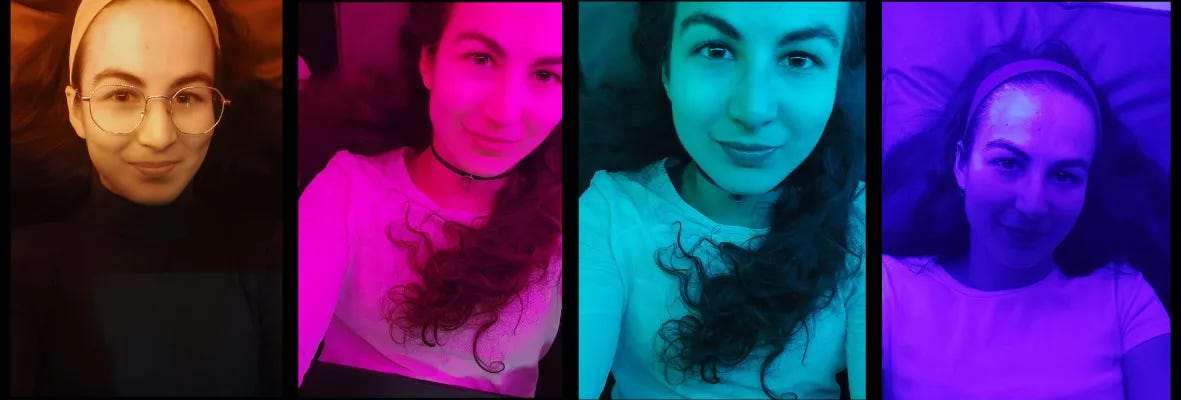
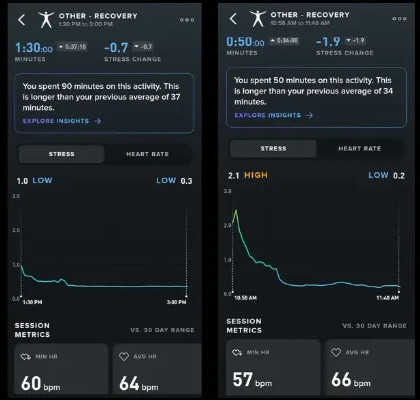
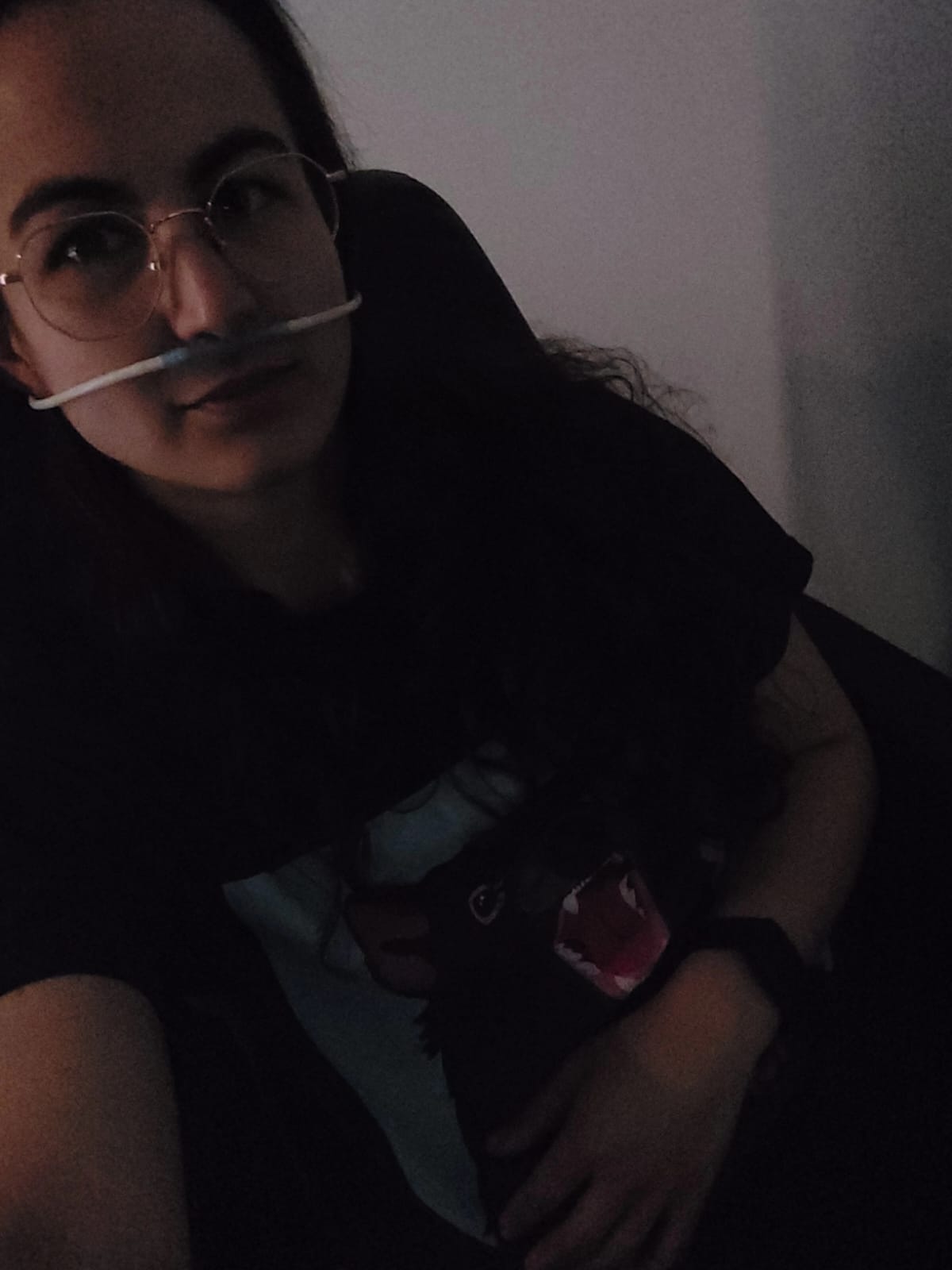
The HBOT selfies! The screenshots are from Whoop during HBOT. You can clearly see how low my RHR gets and how dramatically my stress levels drop during each session.
Red Light Therapy
I started the HBOT experiment first, then added RLT after 3 weeks. I attended both therapies in The Orchard Richmond (Melbourne). This clinic offers a combination of yellow, red, green, blue*
Duration: 5 weeks, 3x a week for 15 mins. Midday.
Impacts on HRV: No effect.
Other Impacts: Similar comments about speed of recovery from straining exercises, and improvements in muscle mass and strength.
I have a tan mark on the left side of my forehead, which becomes apparent during spring and summer. I got this mark when I was about 3 years old after my grandmother poured perfume on my head and took me out under the sun for an hour (or until I began to complain from the burning discomfort). I haven’t tried any special therapies to remove that mark, as it hadn’t concerned me much. However, both David and I noticed that this mark became a bit faint over the course of 5 weeks. This is quite surprising, as we thought this mark was now permanent.
Despite having quite a strong immune system, my skin has always struggled to heal from scars, ever since I was a young kid. What a coincidence that I slipped and fell on my bum while running the RLT experiment. A rock cut my skin and bruised the surface. Given how slow even mozzie bites fade from my skin (about 3-4 months), I wasn’t sure if red light could help me. After 2 weeks, the big red scar was completely gone.
I mentioned on a LinkedIn post last month that in August, I found 3 random white hairs at the crown of my head. Well, I could not find a single white or grey hair on me ever since the RLT began. In fact, my hair grew noticeably fuller.
Conclusion: It may be placebo, but I really felt my face glowing. The experience was short and relaxing — 15 minutes a day is very achievable.
I’ve never had any challenges with pimples, acne, black spots or skin texture. However, I spoke to a few others attending the RLT sessions in the clinic who suffered from acne, and they said they’ve seen significant improvements from week 3. This aligns with external scientific research.
Despite not improving my HRV, there is clear evidence for RLT’s impact on skin and muscles. I highly recommend it as a recovery tool for physical injuries, surgeries and scars, along with healing/aiding skin concerns. Keen to investigate a red light panel for our home next year (once we have some money saved up).

Ashwagandha
The daily recommended dose is 250-500mg. Some studies show benefits for 500-600mg. I chose to start with a very light dose due to my background. This is the starting dose that I recommend for people sharing a similar background until their bodies are used to the effects of the supplement.
Duration: daily, 125mg
Impacts on HRV: Improved by 10 points. The most impactful intervention/experiment I tried since EMDR and NSDR. I hit my personal best HRV and RHR multiple times — gives me a lot of hope.
Other Impacts: Calmer, more balanced, grounded, mindful and optimistic during the day.
During the first 10 days, my REM cycle shortened by 40 minutes and dropped to 1h 50mins. I had consistent and repetitive nightmares, which were tiring throughout the night. David noticed that I woke up with a scream in the middle of the night and shook a few times during the night. Despite this, my sleep stress remained very low, HRV improved and RHR lowered dramatically.
After the first 10 days, my REM cycle increased back to 2h 10 minutes, which is still a bit lower than my prior average. I am no longer having intense nightmares, but rather mildly stressful, chaotic and uncomfortable dreams — there is improvement there. My HRV and RHR continue to improve.
After my research and conversations with my psychologist, we hypothesise that the nightmares are a temporary impact due to an overly ‘relaxed’ state. The REM cycle serves the purpose of processing uncomfortable events during the day; it’s key to be psychologically stable and healthy. However, the REM cycle process events when it is ready. So, a feeling of ‘safety’, activating the parasympathetic tone, having a low RHR and a high HRV have an influence. As my HRV was used to bouncing between 20-37, a rapid increase to experiencing 50s was shocking to the system. My nervous system probably thought, “wow, we have never been this safe and resilient before. I’m ready to process my entire life’s trauma. I can handle anything!” Hence, the flood of nightmares. As my nervous system adjusted to the new HRV average and I did some work on the persistent themes behind the nightmares by journalling, the nightmares began to calm down.
An average person is awake 30-55 minutes while sleeping. I have always been a deep sleeper, only awake for about 15 minutes on average per night (fluctuating between 10-20 minutes, depending on external noise, hormonal changes, etc). I began to fluctuate between 5-15 minutes of awake time per night.
Conclusion: Ashwagandha was my medication to heal from the Pulsetto injury.
Interesting to note that about 2.5 years ago, I tried ashwagandha (400mg) and rhodiola rosea as supplements at different times. Rhodiola rosea made me very panicky and irritated, almost manic. Ashwagandha made me feel a little sick and slightly anxious/uncomfortable. So, this was a pleasant surprise to me. In retrospect, I probably overloaded my body and overwhelmed my nervous system with a very high dose.
I am interested in increasing the dose in the future, if my body adapts to the impacts of this dose. Currently, I am hesitant to increase the dose due to the nightmares. Over the past 5 months, I learned to not force/rush relaxation or the parasympathetic tone, but instead, gently nudge/guide and observe. This dose is already having a lot of impacts on me.
I would like to observe the impacts of ashwagandha on my VO2Max over the next 2 months. There are several studies over the last 5 years concluding that supplementation can help improve VO2Max. A 2023 study found a 9.5% increase in VO2max in male participants and a 7% increase in female participants across an eight-week period when dosed with 600 mg per day.
*If you are based in Melbourne, meet with Symee, the owner of The Orchard Richmond in Richmond and Prahan. His longevity clinics have HBOT, RLT, hydrogen therapy, compression boots, infrared sauna, cold plunge, and sensory deprivation salt float tank.
What’s great about his clinic is the affordability and flexibility of his packages — any 10 therapies of your choice is a set price, and you receive additional benefits for being a member. Every other clinic I’ve found in Melbourne forces customers to buy ‘combo packs’ that involve sauna and cold plunge — i.e. 2x sauna, 2x cold plunge, 2x HBOT, 1 RLT for $XX — and individual purchases are outrageously expensive for my budget.
I’ve got to try hydrogen therapy in his clinic, which is known to support brain and lung health, and has anti-inflammatory effects. This is something I would like to pursue next year for lung and cognitive health.
I tried compression boots 2x a week for 3 weeks. Compression boots don’t impact HRV — I always knew that, but wanted to experiment for muscle recovery. While it is relaxing, I prefer to use a foam roller and massage gun to release muscular tension. Depending on my next TruDiagnostic test results, I may think about experimenting with compression boots specifically for lymphatic drainage effects.
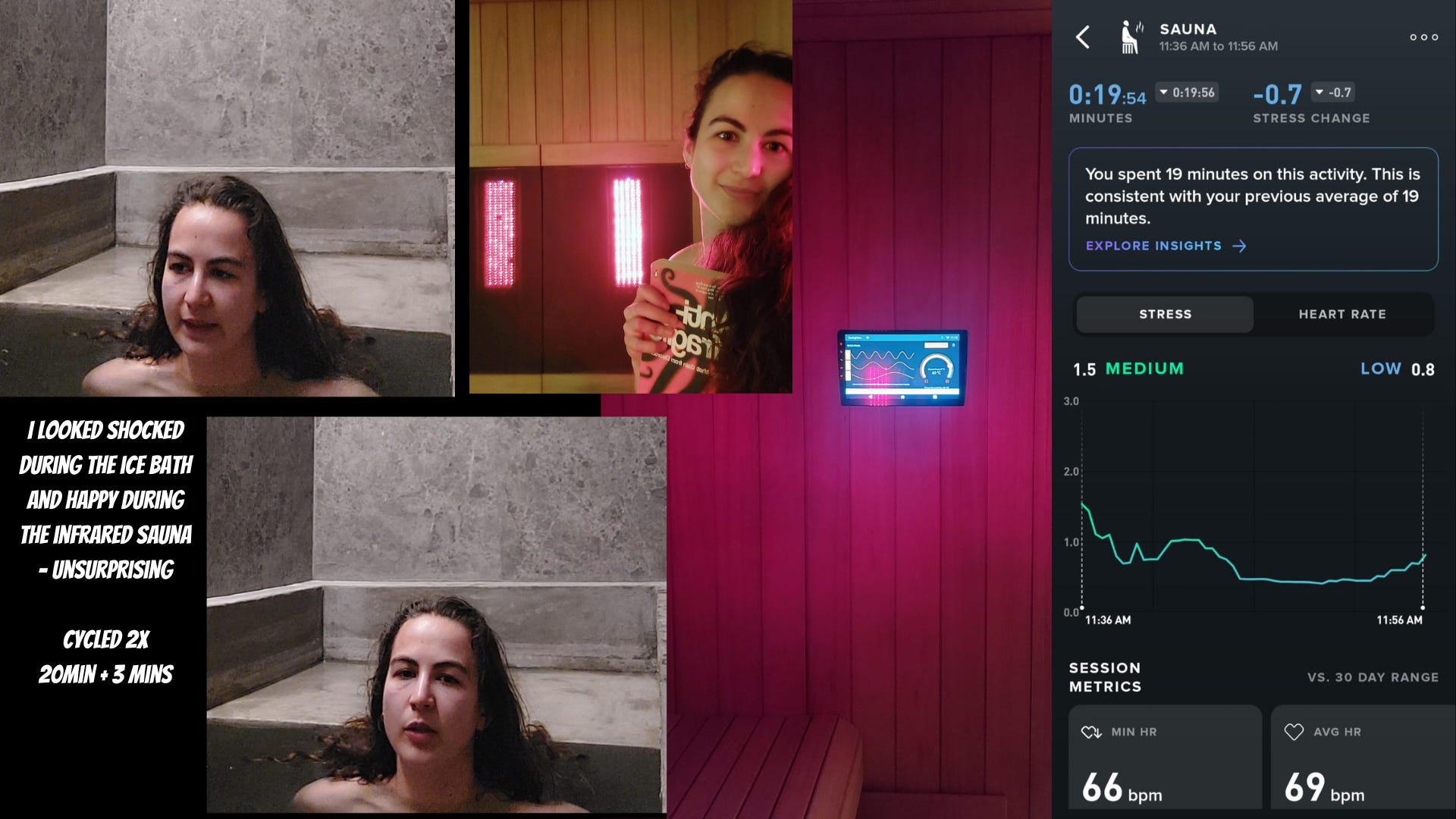
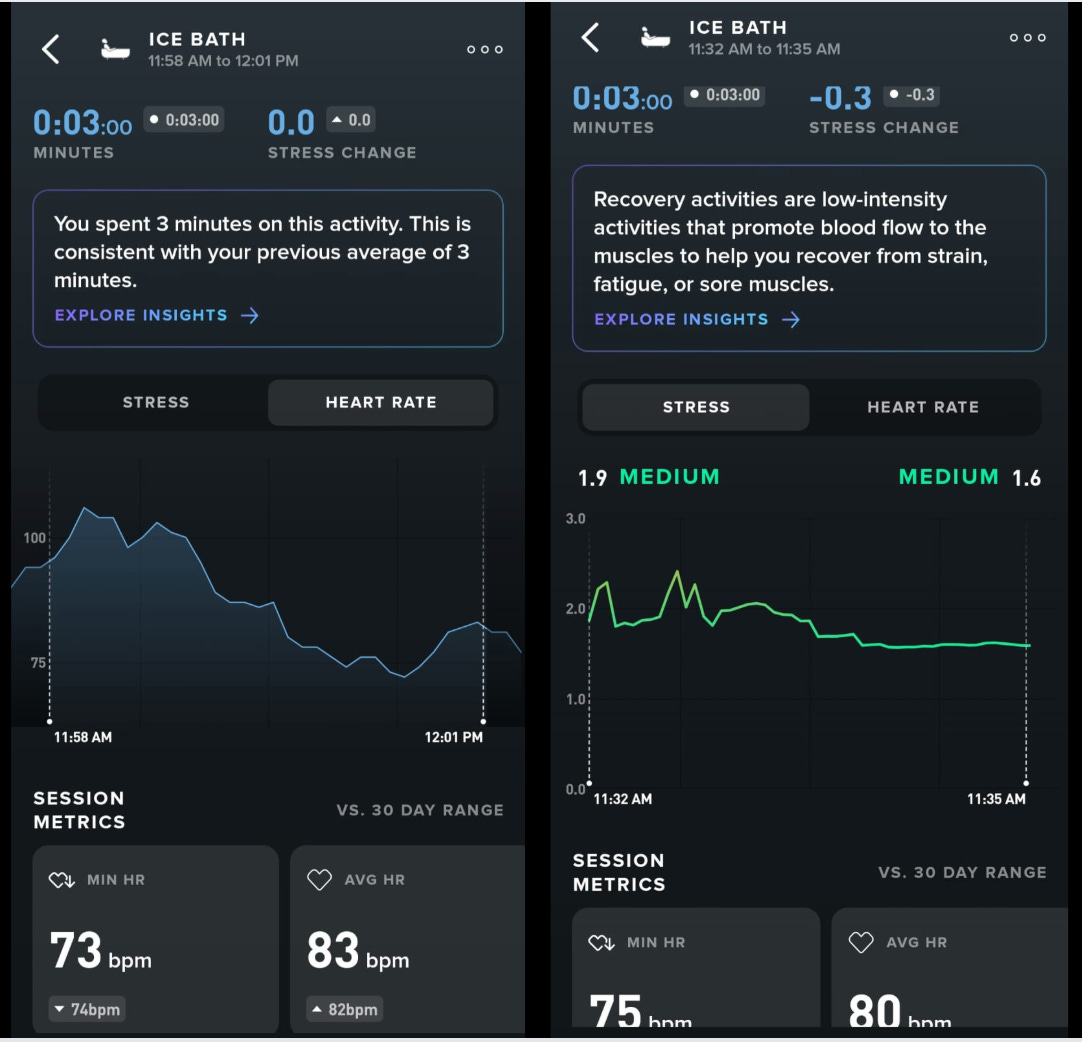
I have also tried the infrared sauna & cold plunge combo. Despite the shock of the cold, this experience was quite calming. Symee recommends this for people with low blood pressure as an alternative to long sauna sessions. During the session, my RHR and stress response went low. I came out of the session feeling refreshed. I cannot report its impact on HRV as I don’t have enough data yet. However, this is something I may pursue as a future experiment.
Impacts of Improving HRV In My Life
In 5 months, I was able to move my average HRV from 24 to 44. That is 20 points of increase. At the start of my journey, my lowest was 19. So far, my highest has been 54.
Likewise, I was able to move my average RHR from 65 to 61. My highest was 72 on the first month of my journey and 76 during Pulsetto use. In December, my lowest has been 58.
This is a damn slow progress. But these are huge improvements! I must say that I’m quite proud.
There is still a long way to go to reach 94 HRV. But even doubling my HRV from its starting point had a lot of impacts in my life. This created new challenges for me to resolve.
Two weeks ago, David and I had a conversation about the changes in me. Sharing this personal conversation because it needs to be shared. Improving HRV is described as a very positive experience for people, but there is the other side of the coin that isn’t mentioned. In my case, this is called “post-traumatic growth.”
ME: I was fine when my maladaptive beliefs and behaviours faded away. That created a better version of me. But I’m not ready to let go of my good qualities. I don’t know who I am right now. I was this awesome person; what made me “me” isn’t there.
HIM: You feel like you are losing yourself.
ME: Yes. It’s concerning. This Doa hasn’t done anything in life. It was the other Doa who won the awards, rapidly progressed in her career, was very efficient with her time, began great healthy habits, pushed herself to reach places she thought she couldn’t.
HIM: But that doesn’t mean this new version of you can’t do these things. I think you are actually finding yourself.
ME: I’m indecisive, not as efficient, not remembering my daily checklist, my mornings fly away — that’s the worst part. I was so fast in the mornings. It’s like I don’t have the same drive.
HIM: This process is temporary. These new challenges are a great sign of progress; they are healthy to have. Every other person has these challenges. Most people don’t wake up at an ungodly time in a rush and get 10 things done within an hour. But they find ways to gain motivation in the morning. You’ll find your unique ways to feel motivated, focused, be assertive and do things without being driven by trauma.
So, what’s changed about me over the last 5 months?
You’ll probably notice that these changes are not negative at all! But major changes are never comfortable. It’s normal to feel a bit of grief every time you let go of something. So, I would like to reflect on what I am “exchanging” instead.
Morning rush, drive & motivation
I used to naturally wake up at about 5am with an elevated heartbeat, slight panic and rush, as if the world was ending if I wasn’t ready to go in 15 minutes. It led to very efficient mornings, when I would be done with gym, shower and brekkie by 8am, ready to start the day. Mornings were my most productive times with so much energy, motivation and drive to work. Absolutely no power stopped or slowed my morning routine. It could be storming and pouring rain outside; I would still be running my 10km via the same route on a Saturday. It made me feel powerful; I was “unstoppable.”
Now, I naturally wake up at about 5.50am with sunrise. I’m noticing the rays of the sun peak between the curtains, the sparkles of light dance through the air — it makes me smile. I roll for a cuddle. I feel grateful. I think about my day. Time slowed down and sped up at once. Or perhaps I slowed down. I feel my body through the motions of warming up, feeling ready, then departing. I get to work at 9am instead.
Why? Once the body gets used to calming down, it realises how healing this is. Rushing without an important reason feels odd and becomes challenging.
Exchanging: pace and efficiency with intention and mindfulness.
Daily plans
I used to naturally remember my daily plan hour by hour with all of its details. I was not just an over-planner, but also an unusually precise recaller of memories. There was very little surprise in my daily life, as all the decisions were made on Friday afternoon.
Now, I still plan for the week ahead on my Friday afternoons. But my plan is very high-level. I feel tired thinking in such detail, or so far out (i.e. why pick your food order from a cafe that you are planning to go to in 54 days?). Even if I plan for something, I genuinely forget. This is forcing me to make a lot of decisions on the spot, which is something I am adjusting to.
Why? Because over-planning and remembering everything with such detail was only necessary when I was on the edge (when getting things wrong meant catastrophe). When I felt safe in my heart, I didn’t need to “control” the uncontrollable for safety.
Exchanging: strong precise planning with agility and adaptability.
Bodily awareness
I used to feel the same every single day. If I felt tired, I thought I felt tired everywhere. I could not differentiate between having sore legs vs a tired nervous system. I was genuinely unaware of my body, which also contributed to my injuries.
As I entered into the parasympathetic tone regularly, my nervous system remembered how peace and calm felt. Now, I can literally say, “I have DOMs on my quads, but the rest of me is fine.” I notice when my heart beats faster. I notice when my nervous system is triggered and when it is tired.
Exchanging: going through the motions with awareness and intention.
Two personalities
I think most people have an “internal voice.” Or maybe a few. Well, I used to have 1 voice. She directed my life on every topic. She had the brutal, sarcastic, hard-to-please, tough love vibes with a clearly defined idea of what was right and wrong. She is the reason why I have a lot of healthy habits in my life. She is the reason why I have valuable relationships, some financial savings, and work success. I have so much respect for her. She may be tough, but she is the voice of reason.
Now, I have another internal voice. It’s a little annoying. She’s so bouncy, happy, excited, optimistic and impulsive. She gets distracted easily. And she notices things that 4 years old girls notice, like reindeer cake pops and butterfly wings. She popped out of nowhere. I never met her in my life. 🧚
Why? A part of my personality that should have been expressed was repressed and sh*t scared as a young child is now feeling safe to come out. My nervous system has healed enough to let her speak up.
Here’s the problem. Making decisions is now even harder. There is unnecessary internal conflict happening in my mind’s control centre on whether we should have salmon with black lentils, spices, herbs and three different types of greens OR a pink pavlova with sprinkles for dinner. Now, I need to practice discipline in a different way. I still love my healthy habits, but I also need to find a balance between the two voices in my head.
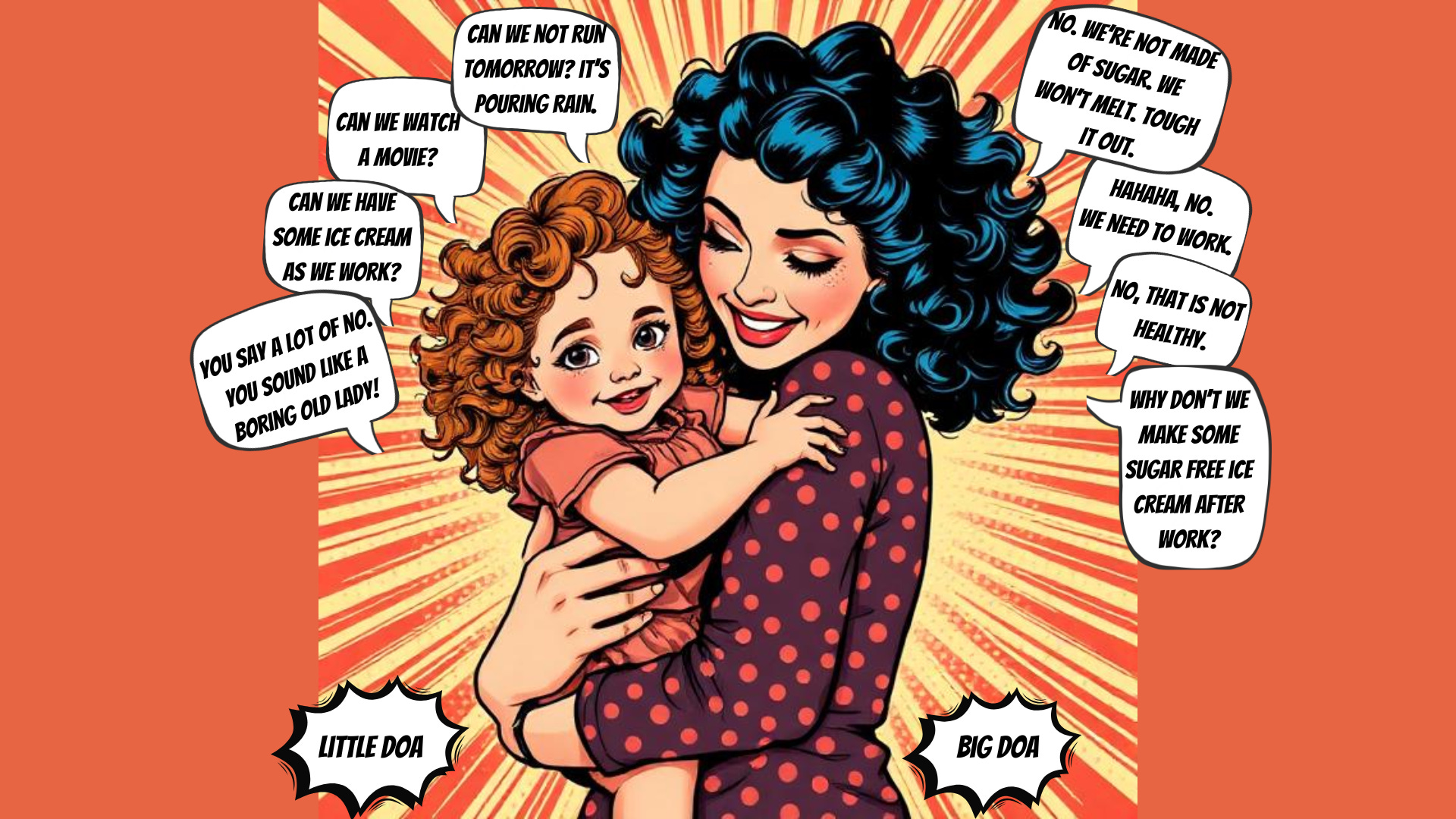
Exchanging: forceful discipline and ‘tough it out for success’ with prioritisation, playfulness, curiosity, optimism, a balanced and rich personality, and real discipline (getting things done even when Little Doa doesn’t find it fun).
Over-thinking & over-explaining. AND things don’t stress me so much anymore
Some examples…
If I am unhappy about something, I feel more comfortable stating my dissatisfaction on the same day or a day after, rather than sitting on sour feelings.
If someone misunderstands and judges me, it sounds like their problem. Communication is a two-way street.
Rather than jumping to catastrophic conclusions, my brain is more inclined to think, “I’m sure it’s not that bad, this isn’t a horror movie, I’m sure we can find a solution.”
Exchanging: trying to control variables out of my control with acceptance and more space/energy in the brain to think about more important things in life.
Social media, clutter, too much noise, fast music, crowds and the chaos of the city are not very tempting (kind of tiring)
Clutter is no longer exciting. It’s tiring. Takes too much unnecessary space in the mind. Simple things make me happier. Wearing the same clothes is relaxing. Quiet is freeing. Empty space invites creativity and deep thoughts. Social media reels are too repetitive. I always valued insightful podcasts and documentaries, but now, I am intentionally choosing to give my precious time to only meaningful content.
Exchanging: rush and adrenaline spikes with simplicity and prioritisation, meaningful and valuable communication, and more space/energy in the brain to think about more important things in life.
I choose calm, peace and quiet. I notice more and more
Everything I achieved so far came from fire, storm and chaos. I thrived in places others were scared to go. I received awards at different times in my life for courage. I have always fought against something, pushed and forced my way through life.
That’s the startup world for product people, right? Work hard, force things to work, wear 8 different hats, go to the trenches, sweat, ship things fast, huge mission statements — fight for something!
But now I don’t feel like fighting. I want to think deeply, find strength and success through calm, peace, intention, curiosity and simplicity, and find a path through empathy and understanding. For the first time ever, I am noticing the finer details of life, the beauty of the present moment. I am noticing the shades of peach and cream on a tulip’s petals, how the ants march in organised lines on wheatgrass, how the clouds shift across the sky and collide. I finally see the beauty of stillness and want to dissolve in time. It’s like I’m on mushrooms or something.
I still love being a PM. I still desire to build products that leave impacts the life quality of others. I’m still passionate and find motivation in meaningful work. But without starting unnecessary fights.
Exchanging: extreme stamina, being the ‘hero’ and fighting for every win with clarity of thought, empathy, mindfulness, inner peace, resilience, simplicity, curiosity, emotional intelligence, and self-awareness.

Future Experiments
I can already tell that next year is going to be challenging to improve my HRV. I am expecting some major events in my life which will have negative impacts on my nervous system — 2 week long hiking trip in a harsh Tasy climate with risk of physical injury, surgery, more frequent travelling (airplanes are the worst for HRV), seeing the soccer world cup (why does the matches have to happen at 8pm??? So bad for sleep!), 2 week horseback safari, and relocating to a new country. Lots of new and unpredictable events — not what a nervous system likes! However, my partner and I have a rare opportunity to live this experience, and we want to make the most of it before starting fresh.
I still have a list of experiments to run. Looking forward to trying the following…
Blue-light blocking glasses
No phones or laptops 60 minutes before bed (only reading allowed)
Increasing ashwagandha dose to 240mg (once the regularity of nightmares is spaced out)
Meditation (after consistently hitting >50 HRV)
Oxyfit breathing trainer (if meditation goes well)
Box breathing (if meditation goes well)
Ice baths (advanced therapy, once consistently hitting >70 HRV)
Celebrating the end of 2025 with a picnic full of gratitude, love, peace, healthy food and drinks. I am hopeful and excited for the experiences of the upcoming year.
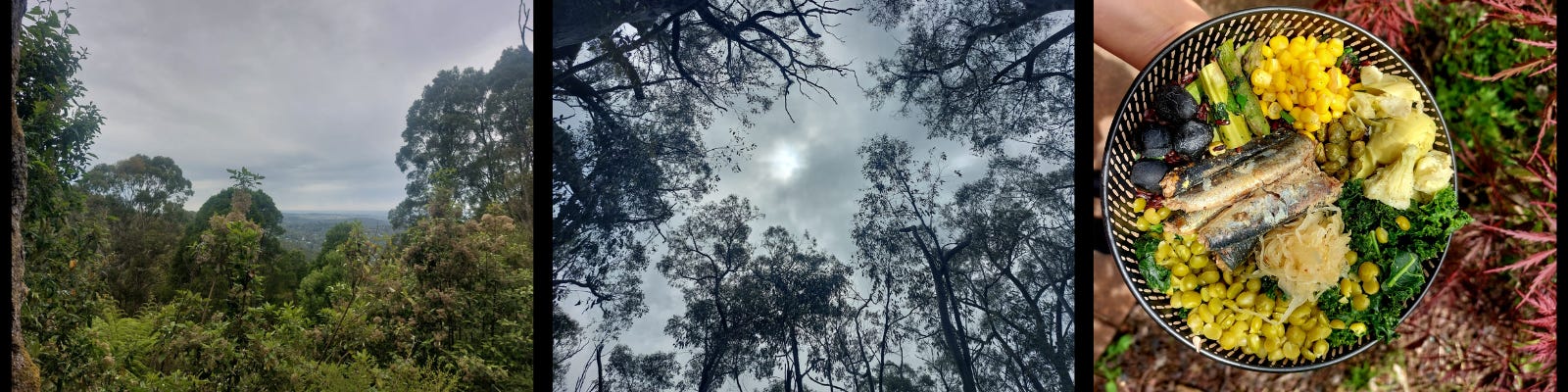
^Slow cooked green split peas, wild black rice, steamed kale, artichoke hearts, corn, asparagus, olives, capers, fresh sardine fillets, fresh parsley, fresh coriander, spring onion, sauerkraut, a touch of lime, cumin and pepper. Served with dandelion root tea.
All the images I use have been generated using deepai.org (the pop art generator). 🦸♀️
If this post is helpful to you, it will probably help others too. Share with a colleague, and if you haven’t done so, subscribe.